Showing posts with label parenting. Show all posts
Monday, June 27, 2011
Out of the Shadow
I've been thinking a lot lately about our "Shadow Selves" and the human tendency to split off the parts of ourselves that we most dislike. I see this all the time with my clients-- not so much in myself, because those unlikeable parts of myself are separated away from consciousness! Carl Jung talked about our Shadow Selves, as the aspects of our personality that we don't want to claim. They are very much there and in daily operation. If we see someone else displaying a feature of our own Shadow Self, we may find ourselves feeling very angry or even disgusted with this person. A strong reaction like this has become my own first clue that I am encountering myself in these people.
I wrote several entries ago about one such Shadow Self, my Know-It-All side. A few weeks after sharing this Shadow Self with the whole world, I began to notice that I wasn't feeling so triggered by a certain person who displayed that trait himself. I realized that bringing my Know-It-All Self out of the shadows made me feel less disdain toward her/the Shadow Self. I shared in that post how the Know-It-All Self came to be and maybe this increased my compassion toward her as well as fellow Know-It-Alls I meet daily!
I often see parents, who encounter in their children, an aspect of their own Shadow Self. This is always difficult for me, because all people have intense reactions to people who display certain shadow traits we find reprehensible or repulsive. It's hard to watch a parent feeling this way toward their own child, yet I know the parent cannot help the way he/she feels. I once worked with a parent that had suffered horrific abuse as a child. She learned to suffer silently under the abuse, behaving as perfectly as possible in order to avoid further abuse. As a child, she learned to disown feelings labeled as "unacceptable" by her abuser-- primarily anger. She was not allowed to demonstrate any sense of outrage or injustice at what was being done to her or she was likely to experience even harsher physical punishment in return. This woman grew up to have a child with serious anger problems. It's probably no accident that the child learned to adopt this particular affect as his primary personality trait. Being an angry kid, however, left his mother feeling very threatened by him and made him unlikeable to her. This, in turn, also triggered her to adopt certain other aspects of her own abuser (i.e., becoming harsh, unjust, overly critical and controlling). This was a complex and unhealthy loop that the mother and child operated within and one that left me feeling very powerless in therapy.
I wasn't trying to zap the power of my Know-It-All shadow self by discussing it openly. That is exactly what seems to have happened, however, and hooray for me! I don't know if the parent I mentioned above would have been thrilled had I suggested she share with the internet world all the ugly aspects of her own angry Shadow Self. What I'm realizing though is that bringing that aspect of herself into consciousness is exactly what she needed-- as painful as it would be to do so. Maybe this could have been done through talking about the angry self, journaling, painting her, or acting it out. Some therapists might have used sandplay, psychodrama, or various other modalities. In our daily lives, we often do the same work without the guidance of a therapist. When we are writing, playing with our children, or creating in various forms, we are dipping our hands into the realm of our own subconscious minds and drawing out forgotten people from those dark places. It is in the birthing of these Shadow People and incorporating them into our conscious selves that we become whole.
Photo above found at:
http://browse.deviantart.com/photography/?qh=§ion=&q=out+of+the+shadow#/d614by
Saturday, May 22, 2010
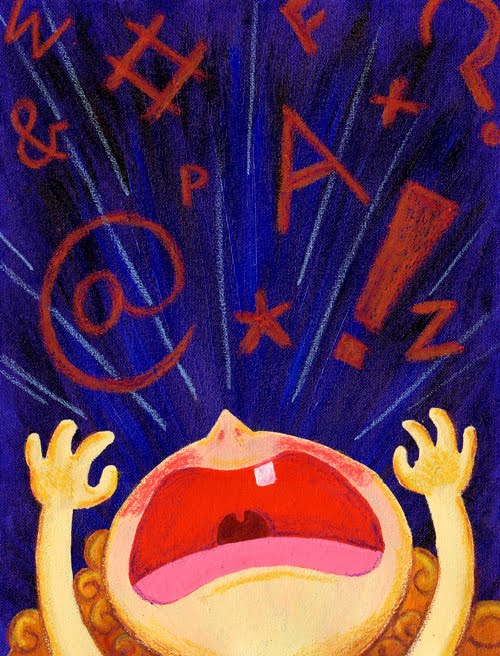
Kids Gone Mad

I had a conversation with a colleague of mine this week, a psychiatrist who has been providing treatment to children for at least 35+ years. I was telling him about the difference of opinion I was having with some of my staff, regarding children who "act disrespectful" in sessions. I tend to believe that children should be able to come into therapy and feel free to say or do whatever they please during their 50-minute session. I have co-workers who do not allow tantrums or sass and are appalled that I allow that. It gets very frustrating sometimes. This doctor laughed at me and said, "We were debating that 30 years ago!"
So apparently this has been a source of conflict among psychotherapists for some time now. I don't think I can argue the other side with real conviction, but from what I understand, these therapists feel you are reinforcing negative behavior by allowing tantrums in session. For example, a child comes into therapy and begins to yell and curse about her Mom making her share a room with her little sister. There are some therapists who would say, "I know you're mad about this, but I don't allow that kind of language in here. It's not appropriate for a 12 year-old to curse like that. If you want to stay here, you need to calm down and stop yelling, so we can talk about this." One of my co-workers has explained to me that she is establishing "good boundaries" with this client and "I don't allow people to yell and curse like that at me, and this child is no different than anyone else." I can actually see the logic in this argument. It is perhaps teaching the child to get control of herself and emphasizing the importance of showing respect with adults. In this scenario, I would also say the therapist was calmly setting parameters for the therapy sessions.
Faced with a similar scenario, I tend to encourage the child's expression of this anger and may even repeat her words to show that I do not judge her anger. For example, after the child has made some loud "inappropriate" comments about Mom, I repeat it back to her with similar conviction, "You think that bitch is just favoring your brother again and you are very mad about it!" Often this diffuses children right away, because they're shocked to hear their therapist cursing. After several instances of this, however, the child becomes settled in knowing that their anger and tirades are not going to be shut down or judged, and they will express themselves freely. After several sessions of this, I've seen children gain a comfort in knowing that their anger is heard and respected in this room by this therapist, and the need to yell and curse about things tends to diminish. I think it's important to note that there has to be some realistic limits to what a child can do in treatment. These limitations should not feel restrictive and are there to keep the child safe and to protect property from being damaged.
I take this stance because I want children to bring all their ugly stuff into therapy. I want them to say the vile things for which other therapists might reprimand them. It's my opinion that giving a child this kind of freedom, allows them the space to bring everything that is inside to the outside. There we can look at it all without judgment, and children tend to sort it out for themselves. The fear of many therapists is that aggressive behavior acted out in therapy may transfer to the home or school environment. I will say that I have not had this happen. It seems that working freely through the anger in sessions actually decreases the need and desire to do it elsewhere. Often when children have been allowed to cut up drawing pictures of siblings or beat up dolls of Daddy, they have come back to me later and reported improved relationships with these people. Anyway, that's the debate!
I feel really passionate about allowing this sort of freedom of expression, because I see it work so well. I work with a 9 year-old girl who shares deeply painful memories of bullying and abandonment by Mom only after her puppet doll "beats me up" for about the first 10 minutes of therapy. I've seen another 10 year-old boy gain insight on his own about jealousy toward his sister, only after I allowed him to dump an entire bin of toys on my floor, toss them around for 40 minutes saying, "THIS is my anger!" With this child, all I had to do was stand by to ensure safety and validate as much as I could, "this is your anger! It's a lot! It's big and very messy!"
I have to say that, as a therapist, you must be really comfortable with your own anger to allow such expressions from other people. I've clipped some shrubs to pieces "working out my mads" and scrubbed some tubs to a sparkling shine while crying it out. I have to believe this has allowed me firsthand experience of physically kneading through emotions, letting them run through my body and my words until they are spent. Perhaps if a kind therapist had allowed and encouraged this from me years ago, I wouldn't have struggled with it as an adult. Nonetheless, my landscaping looks great these days! So, the debate "rages" on, so to speak, and I will continue to encourage my little people clients to come on in and let it on out.
Photo above found at:
http://nii-tan.deviantart.com/art/Tantrum-98119082?q=boost%3Apopular+tantrum&qo=56
Thursday, March 18, 2010
Magical Thinking

I've started doing some extra work, some initial assessments and outpatient therapy with more children. I was a little apprehensive at first, but I am finding that this work is feeding me spiritually! Now I understand what Paul meant when he said "though outwardly we are wasting away, inwardly we are growing day by day." As always, God knows just what I need and when I need it. Let me tell you this great story about a little boy I saw the other day.
This child is 8 years old and has a history of abuse and neglect. In our second session, he and I are playing, and I am watching for themes to begin to emerge in his play. Being the analytical adult I am, I am watching for themes of aggression, control, or anger. I am watching for re-enactments of abuse scenarios and perhaps bringing his perpetrator into our play. He surprises me, however, and points out that a little monster doll sitting in the corner is another child at school who has been bullying him. I walk my little princess doll over to Woody, the character he has chosen to represent himself, and say, "Hey, go over there and tell him to go away!" This child looks me in the eye terrified and says, "No, you do it." I realize that this child is not looking to exercise control or aggression. He just wants to feel protected by the adults in his life, so I tell him, "No problem. Let me take care of this." I walk my princess doll over to that monster and give him a thrashing of the MOST epic of proportions. He gets beat, kicked, punched, and utterly destroyed. All the while my client is laughing and jumping with glee. His joy is infectious and I begin laughing too. I tell that little monster, "There, take that! And if you ever mess with my friend again, I'll come back and do the same thing again! Now get out of here!" We take that monster and hide him behind a stack of books. I can tell that the mother, who is looking on, doesn't know whether to laugh with us or be horrified.
That was last week, so I was excited to see my little friend again this week. I ask his Mom how things have been and she says she's seeing improvement. I ask my client about the bully and he smiles and says, "Oh, we're friends now." This is the power of a child's magical thinking and the magic of play! It is so refreshing to me, watching the innocence with which children mold their little worlds. They don't need to read a book about bullies or go to the seminar. They don't need to call a meeting or talk it out-- not that there is anything at all wrong with those methods of change. But those are adult methods.
I'm being reminded of the child's methods of change, which require immense faith. Children make magical connections where none seem to exist in the real world. Sometimes this is to their detriment, such as making the erroneous connection that Dad left the home because they (the child) were not smart enough or assuming they are being abused because they are bad children. I am being reminded through these precious little kids, sometimes feeling good is as simple as just believing it to exist. Sometimes feeling powerful is thrashing a stuffed doll or, in my case, defeating a sink full of dishes. Somewhere along the way, we lose some of the magic of thinking, and I'm so grateful to be reminded I can still pick that skill up when I need it. If I want to feel peaceful today, it starts with a little play. When the little girl inside me is laughing with delight, just like my client the other day, you know it's going to be a great day.
Photo above found at:
http://throwing-colors.deviantart.com/art/Monsters-99556578
Wednesday, January 27, 2010
How About a Little Compassion?

As I was standing in the grocery line this evening, I browsed through this week's notable and highly-esteemed news source, In Touch magazine. I flipped through some photos of plastic women in overpriced dresses and the essential who's cheating on who articles until I reached the REAL news that spills the beans... Kate Gosselin is stressed! The magazine featured a photo of Kate popping one of her little one's in the mouth, reportedly after scolding the youngster. I didn't read the entire article but saw blurbs about how Kate is falling apart; Kate is reaching a boiling point with the kids; Kate is caught again roughing up the kids, etc. I do not regularly write about celebrities or current news, but this issue really needs to be addressed.
Here's what I know-- Kate Gosselin is a single mother of eight children, due to a humiliating, heart-wrenching divorce that dominated television and magazine headlines for months. Even if the divorce had not been a very public one, it was still a divorce. I'm very grateful I have never had to experience divorce and pray to God I never have to, but having watched many friends, family, and clients go through this hellacious struggle, I know it ain't pretty! Divorce is just about one of the toughest events a person can possibly face, even if the divorce is from a cheating, abusive, or just plain obnoxious spouse. It is still an ending of everything you once believed your life was going to be. This is made all the more agonizing when there are young children involved. Can you imagine the agony when there are EIGHT young children involved?
I do not ever want to try to excuse poor or abusive parenting. My point is this-- why is Kate Gosselin being stressed considered news? An article that went something like this would really be news: "After a public and grueling divorce, single mother of eight, Kate Gosselin, demonstrates patience and profound tolerance with her children. While on an outing with the eight children, a frenzy of paparazzi snapped photos of the cheerful, well-rested Kate embracing her children and laughing kindly at their sibling squabbles." Of course this woman is stressed! She is alone, and I would imagine angry, scared, humiliated, and emotionally disoriented! She is a human being. She is not perfect. Her husband is across the country jet-setting with his latest 20-something love affair, while she is trying to manage their children. Before we cast stones, let us consider for one moment what it must feel like to be Kate Gosselin.
We need a kinder, gentler world where we reserve judgement. We are all human and, thus, prone to mistakes. I thank God my mistakes are not broadcast on the evening news. Can you imagine going through some of your most difficult times and having reporters capturing your entire experience? Heaven forbid you show circles under your eyes, take the kids to school without any make-up on, or publicly discipline a child who just publicly acted a fool. How different our world could be if, for even one day, we reported from a place of compassion and understanding, and refrained from reporting intrusively on other people's life-altering and personal moments. I think the best reporter of Kate's demeanor, feelings, and behavior would be Kate herself, if and when she is ever willing to share her story.
Monday, December 7, 2009
Beyonce is Not Naughty But I Am

Well, I have finally dropped the children off at school this morning and I couldn't be happier for some quiet around here! My five year-old son and I were the unprepared victims of the 9 year-old's Autism Rant. If you've never witnessed an Autism Rant, then be glad! When Hannah launches into one of these passionate long-winded speeches of social injustice, you could be in for an Academy worthy performance. These rants are loud, repetitive, filled with paranoid and delusional beliefs that the world is against her, and cannot be stopped. I have learned that any attempts to stop an Autism Rant are futile. At least in our household, it is best to provide no comments, point out no illogical beliefs or falsehoods, or even offer up an Amen. In fact, trying to intervene in any way, especially with threats of time-out, grounding, or spanking, only fuel the righteous indignation, and could possible turn an Autism Rant into an Autism Rage (very violent, someone gets hurt, not a pretty scene).
So, we've all learned to keep our mouths shut as best as possible, while Hannah stomps around the house like it's her pulpit. She really doesn't mind if you're actually listening or not. The Rant seems to be more for her own benefit, stemming from her intense need to put into words the injustices she has suffered, which this morning happened to be the fact that it was too cold for a skirt. This particular Rant on this morning was actually pretty passionate as it ventured off into the area of who is naughty and who should be on the naughty list. Apparently, I am very naughty and will be getting no presents this year. Bummer. I also learned from this impassioned soliloquy that there are leagues of naughty people at her school and in this family. Furthermore, in true Southern Baptist fashion, Hannah preached to us that you should NEVER put yourself on the naughty list, because that is rude!
Imagine my great relief when, after a 45 minute sermon about bad mommies, naughty lists, and the proper use of "temper fits," I finally have both children in the car and we're on the way to school. Popping two ear buds on her and some Beyonce seemed to soothe her anger somewhat. Beyonce always works for me too. Once Hannah had calmed down some, I thought this might be a good time to revisit some of the disturbing statements she had made during her sermon about the nature of Christmas. "Hannah, it's very important that we remember what Christmas is all about. Christmas is when we celebrate Jesus's birthday. I am so glad that Jesus was born, so now He comes to live in my heart and I never have to be afraid of dying. I'm going to live forever in heaven with Him, the God who made me." There is silence from her in the backseat, and I'm thinking she is turning this over in her mind. Perhaps these words are sinking in. "Having Jesus in my heart and the promise of living with Him forever is the greatest gift I could ever get. Don't ya think?"
She maintains her flat expression and replies to me with a tone that says she is not impressed, "Mom, that is not a good gift." She pops her ear buds back in and turns up All the Single Ladies. Okay, so I survived another Autism Rant, and it never escalated farther. I'll just be grateful for that and let God do the rest of the work on her!
Photo above found at:
http://jmarcdodsonjr.deviantart.com/art/Christmas-card-Santa-List-79211111
Saturday, December 5, 2009
The Condiments of Marriage

Marriage is a very complex and tricky thing. We know how God intended for marriage to be when he created Adam and Eve, and we know that He knew all along that was going to be too hard. We cannot be married without God-- it's just too hard! I hear young people sharing with excitement their news, "I'm getting married! I just love him!". I just smile politely, bite my tongue, and know inwardly, "Yeah, Sister, just wait till he's not so cute anymore and you realize you actually have to WORK at living together."
I supported myself throughout my college years by waiting tables. At the end of every night, we servers cleaned our table sections, which included marrying the condiments. We would fill back to the top any ketchup, mustard, or salt and pepper shakers that had been used, so that all condiments were full for the next day's customers. A half-used ketchup bottle would be married with another half-used ketchup bottle to create something new for the next day. When two people get married they bring together everything they own and join it. They create a home from their joint furnishings and finances. They marry their talents, whether that be organization, patience, handyman, cook, or compassion. When everything that two people own physically, emotionally, and spiritually is married together, life should be easier for them and their potential for growth much greater than they could have as two singles. At least that's the ideal God had in mind. Actually getting there is pretty tough and doesn't magically happen right after you both say "I do."
When you go out to eat, you will readily find your most commonly used condiments right at your table. If marriage were the dining table, there are three main condiments that should always be married at that table to keep the two diners happy. These marriage condiments (the true life blood of marriages) are sex, money, and parenting. When one partner has more control than the other in any of these three areas, this couple is at high risk for an unsatisfactory relationship.
Sex-- both partners should always feel they have full ownership over their own bodies and sexuality and share it willingly when they want and in the ways they feel most comfortable. Any compromises are discussed and agreed upon by both parties. If one partner routinely gives in to the other, invalidating their own needs or feelings, then the condiment grows empty. You have to get married in your sex life. Actually, I tend to believe that when two people do not bring equally to the marriage emotionally, then the sex condiment gets drained pretty quickly.
Money-- both partners should always have complete access to and full knowledge of the money coming into and out of the household. What gets spent, where, and why are decisions made by the two partners who have married their finances and, thus, both have equal say in where the money goes. Often one person may write the checks, balance the account, etc. for simplicity's sake or because one person is more organized in this area. Even so, the married couple operates as partners and equals in the managing of their funds. There are no money secrets and no money dictators.
Parenting-- couples who join their parenting skills have reached an agreed upon plan of how disciplinary issues will be addressed, what rewards will be used and when, and especially how many children there will be, if any! Having and raising children is a joint operation, a business managed by two people who bring together their abilities and both parties are always kept fully informed of the goings on of the child business. When one person is solely responsible for parenting or the two partners are not in agreement on their parenting values and plans, this is a marriage headed for destruction!
You alone cannot supply everything a marriage needs. You cannot give your all, particularly in the areas of sex, money, and parenting, and believe that you will carry this so-called marriage on your own. There might be a piece of paper that says you are married legally, but when one person is in charge and keeps the other in the dark-- where is the joining? Is this really a marriage? If you are the one getting left in the dark or being left out of the partnering in any of these areas, it is your right to speak up. If you care anything at all about your marriage, you will insist to be made an equal partner in these areas, to be heard, and to be respected in these areas. Whether you've been married 15 minutes or 15 years, there is always room for more marrying. Bring what you have to the table and expect the same from your partner. Keeping the condiments of sex, money, and parenting equally married will make for happy couples!
Photo above found at:
http://fireinyourheartx.deviantart.com/art/salt-and-pepper-109914932
Saturday, November 14, 2009
Holland Schmolland
In the vein of celebrating Good-Enough Moms, I'd like to re-print the wonderful article "Holland Schmolland" by Laura Kreuger Crawford, a must-read for all parents of special needs children:
Holland Schmolland
If you have a special needs child, which I do, and if you troll the Internet for information, which I have done, you will come across a certain inspirational analogy. It goes like this:
Imagine that you are planning a trip to Italy. You read all the latest travel books, you consult with friends about what to pack, and you develop an elaborate itinerary for your glorious trip. The day arrives.
You board the plane and settle in with your in-flight magazine, dreaming of trattorias, gondola rides, and gelato. However when the plane lands you discover, much to your surprise, you are not in Italy -- you are in Holland. You are greatly dismayed at this abrupt and unexpected change in plans.
You rant and rave to the travel agency, but it does no good. You are stuck. After awhile, you tire of fighting and begin to look at what Holland has to offer. You notice the beautiful tulips, the kindly people in the wooden shoes, the french fries with mayonnaise, and you think, "This isn't exactly what I had planned, but it's not so bad. It's just different."
Having a child with special needs is supposed to be like this -- not any worse than having a typical child -- just different.
When I read this my son was almost 3, completely non-verbal and was hitting me over 100 times a day. While I appreciated the intention of the story, I couldn't help but think, "Are they kidding? We're not in some peaceful country dotted with windmills. We are in a country under siege -- dodging bombs, boarding overloaded helicopters, bribing officials -- all the while thinking, "What happened to our beautiful life?"
That was five years ago.
My son is now 8 and though we have come to accept that he will always have autism, we no longer feel like citizens of a battle-torn nation. With the help of countless dedicated therapists and teachers, biological interventions, and an enormously supportive family, my son has become a fun-loving, affectionate boy with many endearing qualities and skills. In the process we've created . . . well . . . our own country, with its own unique traditions and customs.
It's not a war zone, but it's still not Holland. Let's call it Schmolland. In Schmolland, it's perfectly customary to lick walls, rub cold pieces of metal across your mouth and line up all your toys end-to-end. You can show affection by giving a "pointy chin." A "pointy chin" is when you act like you are going to hug someone and just when you are really close, you jam your chin into the other person's shoulder. For the person giving the "pointy chin" this feels really good, for the receiver, not so much -- but you get used to it.
For citizens of Schmolland, it is quite normal to repeat lines from videos to express emotion. If you are sad, you can look downcast and say, "Oh, Pongo." When mad or anxious, you might shout, "Snow can't stop me!" or "Duchess, kittens, come on!" Sometimes, "And now our feature presentation" says it all.
In Schmolland, there's not a lot to do, so our citizens find amusement wherever they can. Bouncing on the couch for hours, methodically pulling feathers out of down pillows, and laughing hysterically in bed at 4:00 a.m. are all traditional Schmutch pastimes.
The hard part of living in our country is dealing with people from other countries. We try to assimilate ourselves and mimic their customs, but we aren't always successful. It's perfectly understandable that an 8 year-old from Schmolland would steal a train from a toddler at the Thomas the Tank Engine Train Table at Barnes and Noble. But this is clearly not understandable or acceptable in other countries, and so we must drag our 8 year-old out of the store kicking and screaming, all the customers looking on with stark, pitying stares. But we ignore these looks and focus on the exit sign because we are a proud people.
Where we live it is not surprising when an 8 year-old boy reaches for the fleshy part of a woman's upper torso and says, "Do we touch boodoo?" We simply say, "No, we do not touch boodoo," and go on about our business. It's a bit more startling in other countries, however, and can cause all sorts of cross-cultural misunderstandings.
And, though most foreigners can get a drop of water on their pants and still carry on, this is intolerable to certain citizens in Schmolland, who insist that the pants must come off no matter where they are and regardless of whether another pair of pants is present.
Other families who have special needs children are familiar and comforting to us, yet are still separate entities. Together we make up a federation of countries, kind of like Scandinavia. Like a person from Denmark talking to a person from Norway (or in our case, someone from Schmenmark talking to someone from Schmorway.), we share enough similarities in our language and customs to understand each other, but conversations inevitably highlight the diversity of our traditions. "My child eats paper. Yesterday he ate a whole video box." "My daughter only eats four foods, all of them white." "We finally had to lock up the VCR because my child was obsessed with the rewind button." "My son wants to blow on everyone."
There is one thing we all agree on. We are a growing population. Ten years ago, 1 in 10,000 children had autism. Today the rate is approximately 1 in 150. Something is dreadfully wrong. Though the causes of the increase are still being hotly debated, a number of parents and professionals believe genetic predisposition has collided with too many environmental insults -- toxins, chemicals, antibiotics, vaccines -- to create immunological chaos in the nervous system of developing children. One medical journalist speculated these children are the proverbial "canary in the coal mine", here to alert us to the growing dangers in our environment.
While this is certainly not a view shared by all in the autism community, it feels true to me.
I hope that researchers discover the magic bullet we all so desperately crave. And I will never stop investigating new treatments and therapies that might help my son. But more and more my priorities are shifting from what "could be" to "what is." I look around this country my family has created, with all its unique customs, and it feels like home. For us, any time spent "nation building" is time well spent.
Holland Schmolland
If you have a special needs child, which I do, and if you troll the Internet for information, which I have done, you will come across a certain inspirational analogy. It goes like this:
Imagine that you are planning a trip to Italy. You read all the latest travel books, you consult with friends about what to pack, and you develop an elaborate itinerary for your glorious trip. The day arrives.
You board the plane and settle in with your in-flight magazine, dreaming of trattorias, gondola rides, and gelato. However when the plane lands you discover, much to your surprise, you are not in Italy -- you are in Holland. You are greatly dismayed at this abrupt and unexpected change in plans.
You rant and rave to the travel agency, but it does no good. You are stuck. After awhile, you tire of fighting and begin to look at what Holland has to offer. You notice the beautiful tulips, the kindly people in the wooden shoes, the french fries with mayonnaise, and you think, "This isn't exactly what I had planned, but it's not so bad. It's just different."
Having a child with special needs is supposed to be like this -- not any worse than having a typical child -- just different.
When I read this my son was almost 3, completely non-verbal and was hitting me over 100 times a day. While I appreciated the intention of the story, I couldn't help but think, "Are they kidding? We're not in some peaceful country dotted with windmills. We are in a country under siege -- dodging bombs, boarding overloaded helicopters, bribing officials -- all the while thinking, "What happened to our beautiful life?"
That was five years ago.
My son is now 8 and though we have come to accept that he will always have autism, we no longer feel like citizens of a battle-torn nation. With the help of countless dedicated therapists and teachers, biological interventions, and an enormously supportive family, my son has become a fun-loving, affectionate boy with many endearing qualities and skills. In the process we've created . . . well . . . our own country, with its own unique traditions and customs.
It's not a war zone, but it's still not Holland. Let's call it Schmolland. In Schmolland, it's perfectly customary to lick walls, rub cold pieces of metal across your mouth and line up all your toys end-to-end. You can show affection by giving a "pointy chin." A "pointy chin" is when you act like you are going to hug someone and just when you are really close, you jam your chin into the other person's shoulder. For the person giving the "pointy chin" this feels really good, for the receiver, not so much -- but you get used to it.
For citizens of Schmolland, it is quite normal to repeat lines from videos to express emotion. If you are sad, you can look downcast and say, "Oh, Pongo." When mad or anxious, you might shout, "Snow can't stop me!" or "Duchess, kittens, come on!" Sometimes, "And now our feature presentation" says it all.
In Schmolland, there's not a lot to do, so our citizens find amusement wherever they can. Bouncing on the couch for hours, methodically pulling feathers out of down pillows, and laughing hysterically in bed at 4:00 a.m. are all traditional Schmutch pastimes.
The hard part of living in our country is dealing with people from other countries. We try to assimilate ourselves and mimic their customs, but we aren't always successful. It's perfectly understandable that an 8 year-old from Schmolland would steal a train from a toddler at the Thomas the Tank Engine Train Table at Barnes and Noble. But this is clearly not understandable or acceptable in other countries, and so we must drag our 8 year-old out of the store kicking and screaming, all the customers looking on with stark, pitying stares. But we ignore these looks and focus on the exit sign because we are a proud people.
Where we live it is not surprising when an 8 year-old boy reaches for the fleshy part of a woman's upper torso and says, "Do we touch boodoo?" We simply say, "No, we do not touch boodoo," and go on about our business. It's a bit more startling in other countries, however, and can cause all sorts of cross-cultural misunderstandings.
And, though most foreigners can get a drop of water on their pants and still carry on, this is intolerable to certain citizens in Schmolland, who insist that the pants must come off no matter where they are and regardless of whether another pair of pants is present.
Other families who have special needs children are familiar and comforting to us, yet are still separate entities. Together we make up a federation of countries, kind of like Scandinavia. Like a person from Denmark talking to a person from Norway (or in our case, someone from Schmenmark talking to someone from Schmorway.), we share enough similarities in our language and customs to understand each other, but conversations inevitably highlight the diversity of our traditions. "My child eats paper. Yesterday he ate a whole video box." "My daughter only eats four foods, all of them white." "We finally had to lock up the VCR because my child was obsessed with the rewind button." "My son wants to blow on everyone."
There is one thing we all agree on. We are a growing population. Ten years ago, 1 in 10,000 children had autism. Today the rate is approximately 1 in 150. Something is dreadfully wrong. Though the causes of the increase are still being hotly debated, a number of parents and professionals believe genetic predisposition has collided with too many environmental insults -- toxins, chemicals, antibiotics, vaccines -- to create immunological chaos in the nervous system of developing children. One medical journalist speculated these children are the proverbial "canary in the coal mine", here to alert us to the growing dangers in our environment.
While this is certainly not a view shared by all in the autism community, it feels true to me.
I hope that researchers discover the magic bullet we all so desperately crave. And I will never stop investigating new treatments and therapies that might help my son. But more and more my priorities are shifting from what "could be" to "what is." I look around this country my family has created, with all its unique customs, and it feels like home. For us, any time spent "nation building" is time well spent.
Mommy Guilt

If you are a mother, you are likely familiar with the unique-to-us feeling of Mommy Guilt. I believe women in our Western culture are prone to guilt already, then the responsibilities of Mommyhood come along and pack on more pressure. There is an intense push in our culture for mothers to be perfect in all we do. We must work 40+ hours per week on our jobs, giving 100% there or risk being told, "you're not being a team player." Then we go home exhausted and have our precious babies excited to see us and be with us, yet they get the day's leftovers. We put on the smiles, forge ahead through the fatigue, and clock in for our second job of Mom.
Because I have never parented a "typically developing" child, I cannot really know if my Mommy Guilt is more intense than other mothers. I do, however, spend lots of time with other mothers of special needs children and share specific guilt behaviors with them. As mothers of special needs children, we are prone to stay up way too late researching, spend more time than is necessary calling and visiting doctors, worry excessively about our children's futures, and feel intense guilt at the end of every night when our children still have said disorder. There's always the nagging feeling at the end of the day of did I do enough today for my child? Because if I didn't do enough, I am convinced my child will end up with a miserable life and it will be my fault. We will take out a second mortgage on our home to pay for specialists, schedule round-the-clock therapists and doctors, buy every supplement, try whatever medications the doctor recommends... we will do anything! If we don't do EVERY POSSIBLE THING to "cure" our children, then we are being a BAD mom. I just have one question-- Who the hell sold us this load of garbage?
I'm learning to be a good-enough Mom. My children consistently receive from me my support, love, nurturing, attention, guidance, and discipline. Because of this, I can rest in knowing there is room for mistakes. I will make mistakes as a mother, sometimes being too harsh when I should have shown mercy. I may be too lenient when really my child needed a stern consequence. I mess up and they grow, no, they THRIVE anyway, because they get enough. Having a mother who carries a sense of peace and confidence is just as valuable to a child as a mother who works tirelessly... maybe even more so. Children are tough and resilient. They can survive us despite our parental mistakes. If you don't believe me, just look at yourself. You survived your Mom, didn't you?
Photo above found at:
http://theusedafithrone.deviantart.com/art/The-Virgin-30321810
Thursday, October 29, 2009
Do You Believe in Magic?

There are people who carry way more than they should in this world. They carry the burdens of their children, their spouses, their bosses, foreign countries, alien life forms, and angels in heavenly places. There are some who even carry the burdens of God, and just how arrogant is that, if I might ask? And, yes, I can ask, as I will admit I was once one of those people. I still have moments when I am drawn into the black hole vacuum of some needy person who is carrying too much weight and needs a partner to shoulder it, a hero to come from the heavens and take away their pain. Somehow these types of people can convince us that we are capable of taking away all their pain, and it's just so flattering to believe that. I soon find myself thinking, "Well, if he/she thinks I can solve all these problems, then maybe I can! I can and I will!" I haven't fallen into that trap in awhile, until yesterday.
I have been counseling children and families for almost 10 years, and there is a subtype of parents I encounter-- the desperate parents. These parents are having great difficulty accepting that they have a child with any type of disability or illness. Understandably, the pain of this type of acceptance is very scary and crushing. I drift in and out of acceptance regarding my own children's disabilities, but I accept it or I go crazy. That's the only two options unfortunately. Nonetheless, there are parents who hold onto hope that someday some magical person will come along with magic wand in hand, tap the head of their child and, all ADHD will disappear. Autism will shrink to nothing or severe mental illness will turn to mist and vanish. This magical person must only appear and be willing to impart her divine wisdom and allow their child to sit in her most holy presence, and all will be well.
I am getting better at spotting these types of parents, because I am prone to buying into their grandiose plans for me and their child. One of the first telltale signs is that many of these parents actually say something like this,"We have been to so many doctors and I am just exhausted with this process. Come work your magic!" I usually try to burst that bubble right from the start with, "Well, I hate to tell you this but you're going to learn it about me eventually... I'm human, no magic, sorry." Usually they don't believe me the first few times and continue to try to force magic from me. When the magic persists on not "working," then I begin seeing anger. It often sounds like this, "What have you been doing with my child all this time? All I ever see you do is playing with them. How is that going to help them!? Look, I really need help here! This is not what I thought it was going to be. I need you to talk to her teacher, and could you please tell her case manager that I need those housing forms? I'm not even sure I like this doctor anymore, are you going to be talking to him soon?" Essentially, this parent just took the enormous burden of caring for a sick or special needs child, held it out to me and asked, "Are you going to take this crap off my shoulders or not?"
Be forewarned, if you take the bait (and I have), this is what will play out. You, the therapist (or friend, spouse, etc), will take over the role of shouldering this burden. You will begin making the phone calls, researching the internet, buying the books, emailing the doctor, calling meetings at school, and lecturing the child to get with the program. Therapy sessions turn into what Mom or Dad wants you working on rather than what the child brings to the table for the day. Child clients become defensive and shut down, whether passively or aggressively. Therapists begin to burn out, get angry with the child for not cooperating with the plan! Basically, I have taken the anger and denial from the parents and made it mine. In the meantime, you are not likely seeing much progress with the child with this type of approach. Thus, parents are getting angrier and applying even more pressure. Therapist starts working even harder, gets angrier. Less progress, parents apply more pressure, therapist wears out.
Oh,well... mistake spotted. Time for me to back up and go back to plain old humanity. It was kind of fun for awhile believing I had superhero powers. I almost thought I cured one this time, but no. I've seen good, healthy, slow and steady progress with a child. One more case of the humdrum, slow and laborious work, eating your therapeutic fruits and vegetables, and being only a small part of someone's lifetime of growth. That's just how we humans heal. I guess that's just how we therapists learn too. Drats.
Photo above found at: http://mehmeturgut.deviantart.com/art/pixie-s-magic-36077755
Monday, September 21, 2009
Kathy, 1966

When my mother was nine she baked the cornbread
every day after school. Her face then
the same as today, blue eyes soft with knowing
mouth quiet and still, resigning to
signed contracts.
Her mother is dying.
She has a bad haircut, maybe did it herself,
the bangs stiff as straw on her forehead,
shoes scuffed, scrawny knees that hold
life weight like a body builder. She can cook
green beans, creamed corn, and pinto beans with
the best of them. Little Kathy can fry
potatoes, feed grown men
a father and brother bent to the plow.
She will feed grown men for many years
bent above their own devices of
turning the ground for sorrow. Kathy
found quiet at Mamaw’s, even though
there was no plumbing. She liked to rest
against the splintery fence watching Mamaw milk
the cow, carry the large sloshing pail into the kitchen
set it on the table and get out two
tin cups, Kathy, you want some milk?
There’s the rows of pink hollyhock where
little girls can run without being seen.
Tall stalks of corn
tobacco for miles.
There’s the honeysuckle,
the smokehouse, the outhouse.
Always at Mamaw’s
there’s the cool creek water where
she took off her white church socks,
tip-toed in the shade of the elms
quietly over smooth river rocks.
Here for hours
she is nine years old.
By Melissa Greene
photo above found at:
http://rileyrican.deviantart.com/art/Last-Go-At-It-49641480
Monday, August 3, 2009
Gimme a C! Codependent!

Codependent is a term that confuses many people. Some people believe they know what it means, but really do not have a full understanding of the codependent role. The word codependent has such a negative connotation, too. I mean, who really wants to willingly identify themselves as codependent? Most of us get there only after years of codependent behavior that has made our lives a wreck, and we acknowledge ourselves as codependent. By this time, we would almost graciously accept the label of Boo Boo the Fool just to get some relief! I'm hoping to shed some light on what exactly IS a codependent?
A cheerleading team has a captain and a co-captain. The co-captain is there to assist the captain with tasks that the captain cannot handle alone. The co-captain is the leader in situations where the captain is unable to perform his/her managerial duties for the team. I have never heard of someone say, "Oh, I want to be co-captain of my cheerleading squad!" The co-captain is generally someone who wanted to be captain, and didn't have the seniority, skills, clout, whatever, to be captain. It's somewhat the same with a CO-dependent. The co-dependent is there to assist the addict with tasks that the addict cannot handle alone, as a result of their addiction. The co-dependent has to step up and lead when the addict is unable to perform his/her duties, as a result of their addiction. No one ever says they want to grow up and be an addict, and no one ESPECIALLY says they want to grow up to be a CODEPENDENT!
We become co-dependents by default, that is, when we grow up in an unpredictable, scary, and/or chaotic environment, one where we have no developmentally appropriate level of control. Often these are environments where one or both parents/caregivers are addicts or codependent themselves. Children in these homes cannot predict from day to day what punishments might be, whether parents will be happy or raging, what might make a parent happy, if Dad or Mom will be high, or if anyone will be home to cook dinner. When we cannot be captain and have some measure of control, we are defaulted to codependent.
Let me preface by saying, there are NO perfect parents. We need only be good enough. Children need safety, unconditional warmth, someone who nurtures development of unique skills and traits, a caregiver who provides predictable structure and routine, and someone who listens/validates the child. When one or more of these are consistently not met, the child fails to develop emotionally. The body grows, but there is not a person in there!
The foundational definition of codependency is lack of self or lack of a relationship with self. Codependents are addicted to addicts, taking care of addicts, being angry at addicts, taking out revenge on addicts, getting abused by addicts, leaving addicts and finding new addicts. Codependents can even act out this addiction with other codependents, just to make things clear as mud here. Because no core identity really exists (apart from SHAME perhaps),codependents need the mirroring approval, acceptance, and needs of other people to give themselves a face or identity. Addicts love codependents because the codependent morphs into whatever being the addict requires him/her to be. If the addict needs money, the codependent can provide that. If the addict needs you to love him/her and not ever mention the addiction, codependents can do that. If the addict needs someone to defend and justify their behavior, codependents will do it! Codependents are blank slates upon which addicts can write out the person they need.
Codependents are as variant as the many ethnicities of the human race itself. They do not all look nor behave exactly the same. Some are bitter, unlovable people. Some are successful in their work (probably in a caretaking career, such as nursing or social work!), yet burn out or have multiple boundary and ethical violations on the job and are forced to do something else. Being a codependent is very hard and exhausting work. This is why in addition to the magical morphing trick they do, nearly all codependents beg for help from others with all the caretaking they do. If they are too proud to ask for help with the caretaking, they may play the martyr, do it ALL completely alone (without complaint, mind you) and wind up physically ill, mentally ill, or dead.
The life of a codependent is a tiring one and full of stress and misery, but there is hope! Codependents can heal and get well. They can overcome past wounds, develop a relationship with self, and soon the addict magnet stops working. I feel I've rambled on quite a bit for tonight, so maybe we'll get to that in another post! So, I guess the moral of this story is-- if you're not nominated as captain, then politely decline the co-captain position and just enjoy the away games and the pep rallies!
Photo above found at:
http://wesleykhall.deviantart.com/art/You-Go-here-31600741
Sunday, January 4, 2009
Autism: Who are you?
I have two young children with Autism, ages 8 and 4 years old. Needless to say, life is pretty interesting around here most days. My husband and I have begun to settle into the life of Autism, as much as settling is possible, I suppose. It has been a difficult journey and I am well aware we are only beginning. Like many fellow parents of children with Autism, I have read nearly every book on the subject, been to every seminar, and tried every treatment. We often surprise ourselves with the things we are willing to try in an effort to eradicate this inexplicable monster, Autism. Many statistics today now say that 1 in every 150 children being born will develop Autism. This is clearly an epidemic we're facing and I am sick of it!!! Autism, who are you and what do you want?!
While at the bookstore the other day, I made my usual perusal through the section on developmental disorders. I always like to see if there are any new "cures" being touted or if there are any new social stories that might appeal to my 8 year-old, who loves being taught how to better navigate the social arena. I cannot fathom what life must be like for parents who never have to go through that particular aisle of the bookstore and gaze with pity and horror on us parents who stand in that section for hours. I am not ashamed to admit, I often feel very jealous of parents of "typically-developing" children. The books were well-stocked on this fine day until I came to the shelf on Autism. The books were sparse in this section and I thought to myself, "Another happy hopeful parent has been given the news, 'Your child has Autism.' " This parent then made a quick trek to Barnes and Noble to get better acquainted with the monster. Even as our children grow older, I believe the desire remains for many of us to see this mysterious disorder resolved and understood. I began to feel very angry, not just for my own children, but for all the children that very day whose parents were sifting desperately through the many books.
Later that afternoon, I had a co-worker approach me. She explained that she had been babysitting for a 2 year-old boy and was beginning to have concerns about his development. Given my experience with Autism, it is not uncommon for friends, parents, or teachers to ask me about the disorder. She began to rattle off a list of concerns that sounded like classic Autism. Some of these early indicators would be apparent around age 2 0r 3 and include: failure to begin speaking or significantly delayed speech, resistance to eye contact, often does not respond when name is called, tends to line up or stack toys repetitively, issues with food or clothing texture, hyperactivity or extreme lethargy, resistant to social contact, and fascination with small parts of toys rather than the true function of the toy. The child my co-worker discussed had nearly all of these early signs. I confirmed her suspicion and we discussed the best approaches to having a parent get their child assessed. This is a touchy subject for us parents, and we tend to not take kindly to friends and/or family gently telling us something seems out of sorts with our babies. After this conversation, I was reminded of some of my own early grief and anger. It began to resurface and I wished that Autism was standing in the room with me so I could stomp it ferociously into the ground.
Just a few days after that incident I volunteered at my daughter's school as a chaperon for their Christmas party. I was chatting with another mother and discovered that she too has a younger son with Autism. She expressed to me, "I know Autism is a horrible thing, but I really love my son just the way he is, quirks and all. I wouldn't change a thing about him even if I had the chance." I've heard other parents of children with Autism express this same sentiment and I smile and hold my tongue. I, too, love my children just as they are. They are intelligent and funny. They have oddities that are endearing. They are blossoming in school and amazing us everyday with the things they learn and accomplish. My husband and I anticipate great progress for our children. Nonetheless, if I were ever given the chance to have Autism removed from our lives, I would do it and not think twice. I hate Autism. I hate it intensely. It is a monster, a terrifying puzzle, and a kidnapper of children's lives. I have a fantasy that brings me peace and always puts a smile on my face-- I know that one day my children will have glorified bodies in heaven, where there will be no Autism. I truly believe this and I pray at night to God that He will not deny me the joy of watching the demon named Autism burn eternally in hell.
Autism, if I could speak directly to you, I would like to tell you this, "We have yet to understand you, and likely you are feeling very smug at your ability to destroy many lives. You can take my children's speech and their God-given understanding of human interaction. You can hold them back and pour on the anxiety, but you can never extinguish the unique spirit of the child. You can take no child that is loved. There are sparks within my children you have never touched and never will. I don't understand you, but I trust my God to deal with you... and your day is coming."
While at the bookstore the other day, I made my usual perusal through the section on developmental disorders. I always like to see if there are any new "cures" being touted or if there are any new social stories that might appeal to my 8 year-old, who loves being taught how to better navigate the social arena. I cannot fathom what life must be like for parents who never have to go through that particular aisle of the bookstore and gaze with pity and horror on us parents who stand in that section for hours. I am not ashamed to admit, I often feel very jealous of parents of "typically-developing" children. The books were well-stocked on this fine day until I came to the shelf on Autism. The books were sparse in this section and I thought to myself, "Another happy hopeful parent has been given the news, 'Your child has Autism.' " This parent then made a quick trek to Barnes and Noble to get better acquainted with the monster. Even as our children grow older, I believe the desire remains for many of us to see this mysterious disorder resolved and understood. I began to feel very angry, not just for my own children, but for all the children that very day whose parents were sifting desperately through the many books.
Later that afternoon, I had a co-worker approach me. She explained that she had been babysitting for a 2 year-old boy and was beginning to have concerns about his development. Given my experience with Autism, it is not uncommon for friends, parents, or teachers to ask me about the disorder. She began to rattle off a list of concerns that sounded like classic Autism. Some of these early indicators would be apparent around age 2 0r 3 and include: failure to begin speaking or significantly delayed speech, resistance to eye contact, often does not respond when name is called, tends to line up or stack toys repetitively, issues with food or clothing texture, hyperactivity or extreme lethargy, resistant to social contact, and fascination with small parts of toys rather than the true function of the toy. The child my co-worker discussed had nearly all of these early signs. I confirmed her suspicion and we discussed the best approaches to having a parent get their child assessed. This is a touchy subject for us parents, and we tend to not take kindly to friends and/or family gently telling us something seems out of sorts with our babies. After this conversation, I was reminded of some of my own early grief and anger. It began to resurface and I wished that Autism was standing in the room with me so I could stomp it ferociously into the ground.
Just a few days after that incident I volunteered at my daughter's school as a chaperon for their Christmas party. I was chatting with another mother and discovered that she too has a younger son with Autism. She expressed to me, "I know Autism is a horrible thing, but I really love my son just the way he is, quirks and all. I wouldn't change a thing about him even if I had the chance." I've heard other parents of children with Autism express this same sentiment and I smile and hold my tongue. I, too, love my children just as they are. They are intelligent and funny. They have oddities that are endearing. They are blossoming in school and amazing us everyday with the things they learn and accomplish. My husband and I anticipate great progress for our children. Nonetheless, if I were ever given the chance to have Autism removed from our lives, I would do it and not think twice. I hate Autism. I hate it intensely. It is a monster, a terrifying puzzle, and a kidnapper of children's lives. I have a fantasy that brings me peace and always puts a smile on my face-- I know that one day my children will have glorified bodies in heaven, where there will be no Autism. I truly believe this and I pray at night to God that He will not deny me the joy of watching the demon named Autism burn eternally in hell.
Autism, if I could speak directly to you, I would like to tell you this, "We have yet to understand you, and likely you are feeling very smug at your ability to destroy many lives. You can take my children's speech and their God-given understanding of human interaction. You can hold them back and pour on the anxiety, but you can never extinguish the unique spirit of the child. You can take no child that is loved. There are sparks within my children you have never touched and never will. I don't understand you, but I trust my God to deal with you... and your day is coming."
Sunday, November 30, 2008
The Growing
Already I see the both of you
trying to leave me
leaping upward with the flight of
all living things. You
are always growing away from me.
Some days I cannot wait
cannot bear the counting of the countless breaths
that stand between my worn out bones today and
the free ringing bell promised when you are gone.
You are my children
first unleashed with a thick cord heavily
woven in my long hair and stout
mother muscles. Though you are only
eight and four
already the cord is wide-brimmed silk strands
against which you dance and pull.
I know you are growing away from me.
I prepare at nights
when you sleep
soaking in your closed eyelids the
lashes spread like soft fern against the forest floor
your cheeks full and smooth with
youth, I imprint your tiny faces inside me--
inside me a swell of something
sweet and large
maybe joy
watching you grow older
second by second the sadness
so impossibly intertwined with this thing
that loves you and knows
I will clap the loud clap of our
Creator when He created
the heavens and the earth and said
This is good.
trying to leave me
leaping upward with the flight of
all living things. You
are always growing away from me.
Some days I cannot wait
cannot bear the counting of the countless breaths
that stand between my worn out bones today and
the free ringing bell promised when you are gone.
You are my children
first unleashed with a thick cord heavily
woven in my long hair and stout
mother muscles. Though you are only
eight and four
already the cord is wide-brimmed silk strands
against which you dance and pull.
I know you are growing away from me.
I prepare at nights
when you sleep
soaking in your closed eyelids the
lashes spread like soft fern against the forest floor
your cheeks full and smooth with
youth, I imprint your tiny faces inside me--
inside me a swell of something
sweet and large
maybe joy
watching you grow older
second by second the sadness
so impossibly intertwined with this thing
that loves you and knows
I will clap the loud clap of our
Creator when He created
the heavens and the earth and said
This is good.
Subscribe to:
Posts (Atom)