Showing posts with label therapy/therapists. Show all posts
Monday, June 27, 2011
Out of the Shadow
I've been thinking a lot lately about our "Shadow Selves" and the human tendency to split off the parts of ourselves that we most dislike. I see this all the time with my clients-- not so much in myself, because those unlikeable parts of myself are separated away from consciousness! Carl Jung talked about our Shadow Selves, as the aspects of our personality that we don't want to claim. They are very much there and in daily operation. If we see someone else displaying a feature of our own Shadow Self, we may find ourselves feeling very angry or even disgusted with this person. A strong reaction like this has become my own first clue that I am encountering myself in these people.
I wrote several entries ago about one such Shadow Self, my Know-It-All side. A few weeks after sharing this Shadow Self with the whole world, I began to notice that I wasn't feeling so triggered by a certain person who displayed that trait himself. I realized that bringing my Know-It-All Self out of the shadows made me feel less disdain toward her/the Shadow Self. I shared in that post how the Know-It-All Self came to be and maybe this increased my compassion toward her as well as fellow Know-It-Alls I meet daily!
I often see parents, who encounter in their children, an aspect of their own Shadow Self. This is always difficult for me, because all people have intense reactions to people who display certain shadow traits we find reprehensible or repulsive. It's hard to watch a parent feeling this way toward their own child, yet I know the parent cannot help the way he/she feels. I once worked with a parent that had suffered horrific abuse as a child. She learned to suffer silently under the abuse, behaving as perfectly as possible in order to avoid further abuse. As a child, she learned to disown feelings labeled as "unacceptable" by her abuser-- primarily anger. She was not allowed to demonstrate any sense of outrage or injustice at what was being done to her or she was likely to experience even harsher physical punishment in return. This woman grew up to have a child with serious anger problems. It's probably no accident that the child learned to adopt this particular affect as his primary personality trait. Being an angry kid, however, left his mother feeling very threatened by him and made him unlikeable to her. This, in turn, also triggered her to adopt certain other aspects of her own abuser (i.e., becoming harsh, unjust, overly critical and controlling). This was a complex and unhealthy loop that the mother and child operated within and one that left me feeling very powerless in therapy.
I wasn't trying to zap the power of my Know-It-All shadow self by discussing it openly. That is exactly what seems to have happened, however, and hooray for me! I don't know if the parent I mentioned above would have been thrilled had I suggested she share with the internet world all the ugly aspects of her own angry Shadow Self. What I'm realizing though is that bringing that aspect of herself into consciousness is exactly what she needed-- as painful as it would be to do so. Maybe this could have been done through talking about the angry self, journaling, painting her, or acting it out. Some therapists might have used sandplay, psychodrama, or various other modalities. In our daily lives, we often do the same work without the guidance of a therapist. When we are writing, playing with our children, or creating in various forms, we are dipping our hands into the realm of our own subconscious minds and drawing out forgotten people from those dark places. It is in the birthing of these Shadow People and incorporating them into our conscious selves that we become whole.
Photo above found at:
http://browse.deviantart.com/photography/?qh=§ion=&q=out+of+the+shadow#/d614by
Saturday, March 12, 2011
Reflection vs. Reaction
I will offer a little self-disclosure here. Actually, I think I offer quite a bit of self-disclosure here on these pages, but anyway... I want to share a recent insight I've had. I will change the names and circumstances to protect the privacy of dear others.
I am presently in a relationship with someone where I am experiencing much tension, and this has been ongoing for some time. I also get the sense that I am actually having more anxiety and anger in this relationship than the other person, who we'll call Mr. A. This man, Mr. A, really triggers me. In fact, I sometimes find myself so annoyed by him that I uncharacteristically snap on him, become rude, and have even gotten angry enough to stomp away. Essentially, I throw a little tantrum because I get so ticked off. Just to clarify, I don't typically act like this in relationships! I'm actually known by friends and family for remaining level-headed, avoiding confrontation, and very rarely exhibting anger (even when it is probably warranted). Something about Mr. A really gets my goat, however, and I have no problem getting angry... and quick. Afterward, I always feel guilty, embarrassed at my juvenile behavior, and even more angry at him that he MADE me act that way.
It would be really easy for me to type on and on about all the horrible things this person does and how my anger toward him is justified. I could rant and rave about the rightness of my frustration and how things would be much better if he would just change. What I'm finally understanding, after a significant amount of time with Mr. A, is that he is not real likely to change. What I am now motivated to do (after many months of tension and conflict) is to examine myself.
Mr. A does seem to irritate other people as well and we have mutual friends who have commented on this. None of them, however, seem to get triggered quite as intensely as I do. What I now want to try is REFLECTION rather than REACTION. I have gotten so angry with him at times that my reaction was quick and surprised me. Sometimes I've said something very scathing, scoffed loudly at him, and various other things that surprised me. Sudden reactions. What I would like to try is to stop myself before I get to this point and take a time out. I'm not sure how I'm going to get the time-out. Most likely I'll just say, "Excuse me for just a minute, I just remembered something important I need to take care of," or I might try, "Let me take a few minutes to think on that and I'll get back with you." If you hear me saying that to you this week... well, sorry. It's better than getting hostile and sarcastic, right?
Once I get space and step away, I want to REFLECT. My reflection is what I see when I look into the mirror. I will see me staring back at me! I don't actually intend to go look into a mirror, but maybe I can examine what I am seeing within me at that moment. What am I feeling? What does this feeling remind me of? What earlier times in my life did someone make me feel this way and what was the outcome? Are those past events somehow affecting my present interaction? Most likely, yes. My reaction is so intense, it suggests that a relationship template is being triggered. This is a template that got solidified within me over time after a repeated interaction with someone very close to me. For example, some of us learn at a young age that if you show anger in your home, you are shunned and shamed by a parent, so you learn to stop exhibiting signs of anger and feel shame instead. Later in life, when we encounter someone who wakes up the "shaming parent" template inside us, we automatically and unconsciously slip into the role of shamed child who denies anger. Then we wonder why we feel so crappy every time we're with that person!
I believe that if I REFLECT rather than REACT, I am going to learn some very valuable things about myself. I hope to gain some insight about what type of issue is being triggered. I also hope that I can begin to practice some new ways of dealing with Mr. A rather than the usual red-headed tyrrant routine I've been pulling. I'm not real happy with that act lately. I doubt he is either! Almost makes me feel sorry for the poor guy... just almost but not really. :-)
I'll keep you posted on what exciting traumas I dredge up within myself!
Photo above found at:
http://browse.deviantart.com/?q=snow%20white%20mirror&order=9&offset=24#/d1k9p6n
I am presently in a relationship with someone where I am experiencing much tension, and this has been ongoing for some time. I also get the sense that I am actually having more anxiety and anger in this relationship than the other person, who we'll call Mr. A. This man, Mr. A, really triggers me. In fact, I sometimes find myself so annoyed by him that I uncharacteristically snap on him, become rude, and have even gotten angry enough to stomp away. Essentially, I throw a little tantrum because I get so ticked off. Just to clarify, I don't typically act like this in relationships! I'm actually known by friends and family for remaining level-headed, avoiding confrontation, and very rarely exhibting anger (even when it is probably warranted). Something about Mr. A really gets my goat, however, and I have no problem getting angry... and quick. Afterward, I always feel guilty, embarrassed at my juvenile behavior, and even more angry at him that he MADE me act that way.
It would be really easy for me to type on and on about all the horrible things this person does and how my anger toward him is justified. I could rant and rave about the rightness of my frustration and how things would be much better if he would just change. What I'm finally understanding, after a significant amount of time with Mr. A, is that he is not real likely to change. What I am now motivated to do (after many months of tension and conflict) is to examine myself.
Mr. A does seem to irritate other people as well and we have mutual friends who have commented on this. None of them, however, seem to get triggered quite as intensely as I do. What I now want to try is REFLECTION rather than REACTION. I have gotten so angry with him at times that my reaction was quick and surprised me. Sometimes I've said something very scathing, scoffed loudly at him, and various other things that surprised me. Sudden reactions. What I would like to try is to stop myself before I get to this point and take a time out. I'm not sure how I'm going to get the time-out. Most likely I'll just say, "Excuse me for just a minute, I just remembered something important I need to take care of," or I might try, "Let me take a few minutes to think on that and I'll get back with you." If you hear me saying that to you this week... well, sorry. It's better than getting hostile and sarcastic, right?
Once I get space and step away, I want to REFLECT. My reflection is what I see when I look into the mirror. I will see me staring back at me! I don't actually intend to go look into a mirror, but maybe I can examine what I am seeing within me at that moment. What am I feeling? What does this feeling remind me of? What earlier times in my life did someone make me feel this way and what was the outcome? Are those past events somehow affecting my present interaction? Most likely, yes. My reaction is so intense, it suggests that a relationship template is being triggered. This is a template that got solidified within me over time after a repeated interaction with someone very close to me. For example, some of us learn at a young age that if you show anger in your home, you are shunned and shamed by a parent, so you learn to stop exhibiting signs of anger and feel shame instead. Later in life, when we encounter someone who wakes up the "shaming parent" template inside us, we automatically and unconsciously slip into the role of shamed child who denies anger. Then we wonder why we feel so crappy every time we're with that person!
I believe that if I REFLECT rather than REACT, I am going to learn some very valuable things about myself. I hope to gain some insight about what type of issue is being triggered. I also hope that I can begin to practice some new ways of dealing with Mr. A rather than the usual red-headed tyrrant routine I've been pulling. I'm not real happy with that act lately. I doubt he is either! Almost makes me feel sorry for the poor guy... just almost but not really. :-)
I'll keep you posted on what exciting traumas I dredge up within myself!
Photo above found at:
http://browse.deviantart.com/?q=snow%20white%20mirror&order=9&offset=24#/d1k9p6n
Wednesday, March 9, 2011
Therapy? For Me?
There are many commonly held misconceptions about therapy that I'd really like to de-bunk, but I'm going to focus on the top 4 I hear most often. Put on your big girl panties and your big boy undies, if you plan to proceed:-)
1. Therapy is only for crazy people: This has to be THE most common misconception/untruth about therapy and is most often spoken by someone who really needs therapy. First of all, what do you mean by crazy? Aren't we all just a little crazy? There is no shame in going to a therapist for help or support. If you had a disease like diabetes, you would take your medication and go to your doctor appointments without shame. Similarly, if you have experienced unforeseen events in life that have crippled you emotionally, it is good to seek the help of a therapist. It is good to take care of yourself and be seen by a professional who is trained and experienced in walking people through their hard times. Many people are blessed with genetics that predispose them to mood disorders. Then life comes along and brings out the symptoms. We go to therapy because we cannot overcome and deal with much of our emotional baggage all on our own. A good therapist is mindful of the interplay happening between the two of you and is aware that it is this interplay that is essential in you getting better! Relationship is key to healing! I personally believe therapy is especially important if you are a therapist yourself. My mind and my psyche are my primary work tools and I want them to be clear and healthy. Otherwise, I'm bringing my own dysfunctional patterns, beliefs, and feelings into the therapy relationship and acting it out with my clients-- not good. And, yes, you are doing that if you are a therapist. You are human after all, not perfect! Remember, I did warn you to put on your big girl and big boy undies. :-)
2. I don't need therapy, I just take medicine for that: I hear so many people say this. There are many wonderful medications designed to treat mental illness. I am very glad for this. In fact, I hope and pray for even more effective medications to come on the market all the time. We are in need of medications to treat biochemical imbalances that can lead to depression, psychosis, and anxiety. I also see many clients for whom the medications are absolutely an essential part of their treatment, and I know they would experience severe regression without the meds. BUT (and you knew the BUT was coming) medication ONLY is nothing more than a good start for most people. It's highly unlikely that you are going to find a medication that is going to cure it all. I see clients who find a good medication that stops their anxiety attacks all together-- GREAT! These clients feel they are better now and no longer in need of therapy. They then go on to experience one dysfunctional relationship after another, spend themselves into great debt again and again, have constant conflict with co-workers or family, etc., etc. In my own experience as a therapist, I have never seen a client who experienced anxiety in a vacuum. This is to say, they are experiencing crippling anxiety for no apparent reason, with no history of trauma, or family dysfunction that hard-wired their brain to respond in this way. I am not saying these types of people don't exist. I'm just saying that in 10 years of doing therapy, I've personally never seen it! It is possible to live without potentially addictive medications and learn to manage anxiety. Let your medication serve as a springboard that allows you to participate in therapy at an even deeper level. Remain open to the fact that there are characterological and interpersonal issues impacting your life that medication will never resolve. If you're waiting on the right medicine to come along that will finally make you feel better, you might be waiting for a long time. Medication combined with talk therapy will get you there!
3. A good therapist will be able to fix me: Many people come to therapy believing that I hold the solutions to their problems. They believe I will give them a magical answer and POOF, things will be great. They are often sorely disappointed when I have to tell them, "Sorry, my magic wand is in the shop." Certainly, there are people who need information. There are many clients who need to know more about their diagnosis. They may need to know more about the common effects of childhood sexual abuse or being the child of an alcoholic parent. This information alone can be very healing and give a person direction in how they think about themselves and the world. There are times too, when a client simply needs guidance and it is good for a therapist to provide it. Most of the time, however, my role is NOT to sit with you for an hour telling what you what you should be doing if you want to feel better. If you have a therapist who does that with you, how good does that feel? I want to encourage clients to explore themselves, dig deep inside the stuff of themselves. Together we sort through the trash, how did the trash get there, what can we do with it, what part am I playing in all the drama that goes on in my life? Good therapy also means working patiently through the ups and downs of the therapeutic relationship. Therapy means for many people that they experience warmth and a non-judgmental attitude from another person, maybe for the first time in their lives. That goes a lot farther than a therapeutic lecture. Therapy is a process of you learning about yourself, being courageous and honest about yourself, and actively working toward change.
4. I don't have time for therapy: Honey, you don't have the time to skip it. For people who are experiencing extreme stress, anxiety, chronic conflict with others, depression, addictions, and various other dysfunctional patterns, you cannot afford to continue another day without gaining some therapeutic insight. Each day that you continue on in your life engaging in the same dysfunctional patterns, experiencing the same negative and unhelpful thoughts, going deeper into dangerous depression and addiction, you make it much harder to ever extract yourself from it. You're also very likely creating further damage within your relationships that will have to be addressed and healed later as well as re-creating dysfunctional patterns in your life that you are probably unaware you are even re-creating. Good therapy cannot be postponed. It is too essential to put off until you have more time, because life will catch up with you eventually. When life and our own brokenness forces us into therapy... well, that's just no fun. Make the time now.
Rant ended. :-)
Saturday, November 13, 2010
Intimacy: Do It Afraid

A reader recently asked for some specific tools in learning to tolerate intimacy. Intimacy, the sharing of your genuine self with another and experiencing the genuineness of another, can feel wonderful and also very scary. In those simple moments of intimacy, one can feel so vulnerable. When we expose our soft spots, there is the risk of that fragile place being crushed by another. This is especially true for those of us who have been crushed in the past. Having offered entry into your true self and having it trashed, one can become cynical, even downright phobic of trying again.
Being a 12 Stepper, I hold a firm belief in a Higher Power and my Higher Power is God. I believe God desires for us to have intimacy first and foremost with Him and there is a holy place within us reserved for God alone. Beyond that, I also believe he desires for us to enjoy intimacy with other trusting people, and God offers continual comfort and healing for the times we will be hurt by others in the process. Being intimate always requires the risk of being hurt or disappointed, and the reward is always worth the risk. Yes, you will be hurt. It's just part of the process. You will survive and heal from these hurts.
Here are a few tools for those of you who are ready to remain open to the wonderful gift of intimacy but often feel afraid and want to pull back:
1. Simply Be Present In moments of intimacy (whatever that might be, conversation, quiet times together, eye contact, sex, etc.)when you feel the anxiety begin to rise, simply remain present. Stay in the moment and just observe it. Notice the sights and sounds of the moment. Simply observe them, identify them (i.e., my husband is wearing blue, the TV is on in the other room, my left knee aches). Sometimes identifying the simpler components of a moment can reduce the anxiety of it. Let the pressure of the moment recede while you identify these smaller components.
2. Breathe and Soothe When the anxiety begins to rise, take a deep breath in for as long as you can hold it, then release for as long as you can release it. Take several of these belly-deep breathes and speak in a soothing voice to yourself inwardly such things as "I am OK right now," "these moments are good for me and my partner," "nothing bad is happening right now," "I am just fine, I can do this, this is good." Relax, breathe, and soothe yourself with kind words. Talk yourself gently through it. You have to learn to tolerate the moment rather than escape it. When you don't escape the anxiety, you find that it reaches a peak, then begins to recede. After you have tolerated and talked yourself through the anxiety, you can gain confidence over it.
3. Daily Alone Time with God I say daily because you probably need this frequent practice if intimacy is difficult for you. How do you expect to feel OK sharing deeper parts of yourself with another when you cannot even experience those deeper parts when alone? Sit quietly with God and feel his acceptance of every single part of you. As you learn to feel OK with all of you, then you will grow more comfortable sharing that with others. It takes a little time and patience with yourself.
4. Practice Be willing to put yourself in situations of intimacy that make you uncomfortable. These are wonderful opportunities to practice. Don't worry about whether or not you are doing it "right," only be proud of yourself for continuing to try. Pat yourself on the back and cheer yourself on, "I am so brave doing this. So many people never show this kind of willingness to grow, but I want more intimacy!" And this is true, many people struggle with this step-- practicing. It's just too hard, so they make excuses for why they cannot go on that date, excuses for why they need to work a couple hours late rather than go home to the wife, make excuses for why they cannot talk with family when they do come home.
These 4 strategies are loosely based on Dialectical Behavior Therapy (DBT)pioneered by Marsha Linehan. I use these strategies with clients coping with many different types of anxiety.
Photo above found at:
http://gemini-soul.deviantart.com/favourites/#/d1dqgwk
Wednesday, June 30, 2010
Midwife to Tears

As a therapist, you know it's been a good week of productive therapy when you've gone through an entire box of Kleenex in your office. This is not to say that tears alone produce healing or progress, but I know that tears sometimes will break down barriers. I have many clients that all began treatment with me around March of this year and all of them are reaching a similar place in treatment right now-- hitting the core. It's been emotionally draining for me to help them contain the heaviness of what we are reaching. It never fails to amaze me, though, watching the human spirit heal itself. I am in awe each time it happens, kind of like the miracle of watching a child being born. It's really beautiful to watch someone travail in pain, produce a nugget of truth, work through it, and emerge someone whole. I love my job!
I wonder-- what is it about tears? I have seen some people whose tears seem to be meaningless. They cry over most anything, all the time, to no benefit. The tears have come to mean nothing and produce nothing. It's like they are stuck in grief and crying. That's a very sad place to be. More often, however, particularly with children, I find those people who refuse to cry. I can't tell you the number of people I have met in therapy who tell me crying is for wussies, both girls and boys alike. It's unfortunate that somewhere in their lives they have been given this message. It really requires great strength to let yourself cry. You have to have the confidence of knowing you can contain yourself within the grief. Crying is a release and, thus, a trusting that as you let this part of yourself go, there will still be a self standing once the tears stop. For most of us who have this innate understanding of tears, that they come and they go, we are able to allow them to work for us as needed. Imagine what it's like for those who never get that release and how terrifying it must be to believe you cannot cry for fear of losing yourself.
This week I've had the wonderful opportunity to play midwife to the tears of children. It's been such an honor to sit by them and coach the tears that have been welling for years. We have sat together in the quiet while tears crowned and spilled. I am so proud of these little people who finally felt brave enough to let that part of themselves go. They have learned crying is not weak. From a place of true strength, they have allowed the tears to do their own work. No one has been lost this week, but with the help of a box of Kleenex, lots of people were found. :-)
Photo above found at:
http://gemini-soul.deviantart.com/favourites/#/d2gav1c
Saturday, May 22, 2010
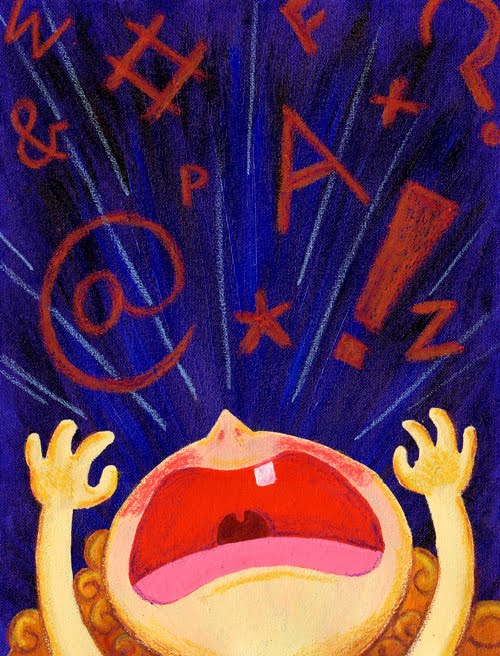
Kids Gone Mad

I had a conversation with a colleague of mine this week, a psychiatrist who has been providing treatment to children for at least 35+ years. I was telling him about the difference of opinion I was having with some of my staff, regarding children who "act disrespectful" in sessions. I tend to believe that children should be able to come into therapy and feel free to say or do whatever they please during their 50-minute session. I have co-workers who do not allow tantrums or sass and are appalled that I allow that. It gets very frustrating sometimes. This doctor laughed at me and said, "We were debating that 30 years ago!"
So apparently this has been a source of conflict among psychotherapists for some time now. I don't think I can argue the other side with real conviction, but from what I understand, these therapists feel you are reinforcing negative behavior by allowing tantrums in session. For example, a child comes into therapy and begins to yell and curse about her Mom making her share a room with her little sister. There are some therapists who would say, "I know you're mad about this, but I don't allow that kind of language in here. It's not appropriate for a 12 year-old to curse like that. If you want to stay here, you need to calm down and stop yelling, so we can talk about this." One of my co-workers has explained to me that she is establishing "good boundaries" with this client and "I don't allow people to yell and curse like that at me, and this child is no different than anyone else." I can actually see the logic in this argument. It is perhaps teaching the child to get control of herself and emphasizing the importance of showing respect with adults. In this scenario, I would also say the therapist was calmly setting parameters for the therapy sessions.
Faced with a similar scenario, I tend to encourage the child's expression of this anger and may even repeat her words to show that I do not judge her anger. For example, after the child has made some loud "inappropriate" comments about Mom, I repeat it back to her with similar conviction, "You think that bitch is just favoring your brother again and you are very mad about it!" Often this diffuses children right away, because they're shocked to hear their therapist cursing. After several instances of this, however, the child becomes settled in knowing that their anger and tirades are not going to be shut down or judged, and they will express themselves freely. After several sessions of this, I've seen children gain a comfort in knowing that their anger is heard and respected in this room by this therapist, and the need to yell and curse about things tends to diminish. I think it's important to note that there has to be some realistic limits to what a child can do in treatment. These limitations should not feel restrictive and are there to keep the child safe and to protect property from being damaged.
I take this stance because I want children to bring all their ugly stuff into therapy. I want them to say the vile things for which other therapists might reprimand them. It's my opinion that giving a child this kind of freedom, allows them the space to bring everything that is inside to the outside. There we can look at it all without judgment, and children tend to sort it out for themselves. The fear of many therapists is that aggressive behavior acted out in therapy may transfer to the home or school environment. I will say that I have not had this happen. It seems that working freely through the anger in sessions actually decreases the need and desire to do it elsewhere. Often when children have been allowed to cut up drawing pictures of siblings or beat up dolls of Daddy, they have come back to me later and reported improved relationships with these people. Anyway, that's the debate!
I feel really passionate about allowing this sort of freedom of expression, because I see it work so well. I work with a 9 year-old girl who shares deeply painful memories of bullying and abandonment by Mom only after her puppet doll "beats me up" for about the first 10 minutes of therapy. I've seen another 10 year-old boy gain insight on his own about jealousy toward his sister, only after I allowed him to dump an entire bin of toys on my floor, toss them around for 40 minutes saying, "THIS is my anger!" With this child, all I had to do was stand by to ensure safety and validate as much as I could, "this is your anger! It's a lot! It's big and very messy!"
I have to say that, as a therapist, you must be really comfortable with your own anger to allow such expressions from other people. I've clipped some shrubs to pieces "working out my mads" and scrubbed some tubs to a sparkling shine while crying it out. I have to believe this has allowed me firsthand experience of physically kneading through emotions, letting them run through my body and my words until they are spent. Perhaps if a kind therapist had allowed and encouraged this from me years ago, I wouldn't have struggled with it as an adult. Nonetheless, my landscaping looks great these days! So, the debate "rages" on, so to speak, and I will continue to encourage my little people clients to come on in and let it on out.
Photo above found at:
http://nii-tan.deviantart.com/art/Tantrum-98119082?q=boost%3Apopular+tantrum&qo=56
Thursday, March 18, 2010
Magical Thinking

I've started doing some extra work, some initial assessments and outpatient therapy with more children. I was a little apprehensive at first, but I am finding that this work is feeding me spiritually! Now I understand what Paul meant when he said "though outwardly we are wasting away, inwardly we are growing day by day." As always, God knows just what I need and when I need it. Let me tell you this great story about a little boy I saw the other day.
This child is 8 years old and has a history of abuse and neglect. In our second session, he and I are playing, and I am watching for themes to begin to emerge in his play. Being the analytical adult I am, I am watching for themes of aggression, control, or anger. I am watching for re-enactments of abuse scenarios and perhaps bringing his perpetrator into our play. He surprises me, however, and points out that a little monster doll sitting in the corner is another child at school who has been bullying him. I walk my little princess doll over to Woody, the character he has chosen to represent himself, and say, "Hey, go over there and tell him to go away!" This child looks me in the eye terrified and says, "No, you do it." I realize that this child is not looking to exercise control or aggression. He just wants to feel protected by the adults in his life, so I tell him, "No problem. Let me take care of this." I walk my princess doll over to that monster and give him a thrashing of the MOST epic of proportions. He gets beat, kicked, punched, and utterly destroyed. All the while my client is laughing and jumping with glee. His joy is infectious and I begin laughing too. I tell that little monster, "There, take that! And if you ever mess with my friend again, I'll come back and do the same thing again! Now get out of here!" We take that monster and hide him behind a stack of books. I can tell that the mother, who is looking on, doesn't know whether to laugh with us or be horrified.
That was last week, so I was excited to see my little friend again this week. I ask his Mom how things have been and she says she's seeing improvement. I ask my client about the bully and he smiles and says, "Oh, we're friends now." This is the power of a child's magical thinking and the magic of play! It is so refreshing to me, watching the innocence with which children mold their little worlds. They don't need to read a book about bullies or go to the seminar. They don't need to call a meeting or talk it out-- not that there is anything at all wrong with those methods of change. But those are adult methods.
I'm being reminded of the child's methods of change, which require immense faith. Children make magical connections where none seem to exist in the real world. Sometimes this is to their detriment, such as making the erroneous connection that Dad left the home because they (the child) were not smart enough or assuming they are being abused because they are bad children. I am being reminded through these precious little kids, sometimes feeling good is as simple as just believing it to exist. Sometimes feeling powerful is thrashing a stuffed doll or, in my case, defeating a sink full of dishes. Somewhere along the way, we lose some of the magic of thinking, and I'm so grateful to be reminded I can still pick that skill up when I need it. If I want to feel peaceful today, it starts with a little play. When the little girl inside me is laughing with delight, just like my client the other day, you know it's going to be a great day.
Photo above found at:
http://throwing-colors.deviantart.com/art/Monsters-99556578
Monday, January 25, 2010
When PTSD goes AWOL (PTSD, part 2)

I think the most common and troubling PTSD I tend to see is in teens and/or adults who have experienced trauma (often multiple traumas) and has gone untreated for many years. Over the years they have developed a set of behaviors aimed at relieving their anxiety, which often includes various addictions. I also see that what began as PTSD symptoms (see previous post for a listing) has morphed into a post-traumatic stress personality. There may be minimal PTSD symptoms remaining years after the trauma(s) have occurred and in their place is an anxiety-ridden, angry monster in denial!
This is not to say that everyone who has ever experienced PTSD has his or her personality altered. And I also want to clarify that technically speaking, there is no such thing as post traumatic stress personality. This is just the name I have come up with to describe this type of personality. Typically this is a person who experienced multiple traumas, interwoven/complex traumas, or trauma that occurred repeatedly over a significant period of time. These traumas typically occurred at a young age, probably before age 8, and no one (including the child or adult in question ) has linked these past traumas to present day feelings. Usually these clients will say, "Oh, that happened a long time ago. I'm over it." This client has received no direct support, validation, or treatment related to the traumas they have experienced. The client has likely presented for treatment around age 17 due to frequent assaults on peers and teachers, chronic tension with a caregiver, inability to form attachments, and drug use. Usually these kids have been diagnosed with Attention Deficit Hyperactivity Disorder or possibly even Conduct Disorder (a disturbing diagnosis equivalent to Antisocial Personality Disorder for kids).
It is very common that these children or adults continue to have much chaos and drama in their lives, often at their own doing. Although they may no longer experience some of the acute symptoms of PTSD, the child or adult may engage in daily fights or sexual behavior that staves off the symptoms. The fighting or sexual behavior (or various other "delinquent" behaviors) have become reinforcing in themselves. They work! They keep people at a distance or get the desired attention. They provide immediate relief and maintain a certain level of required chaos. In some cases I see children or adults who seem to repeatedly re-create the original traumas. It is believed that many people do this in the desperate attempt to make right the past trauma. For example, a child who witnessed years of domestic violence may choose a violent partner as an adolescent, believing "my love will change him, this time it will be different, and I will feel BETTER." I also see adults who were victims of physical abuse grow up and have children who are abusive toward them. They have again become the victim within their own home. Another example is the child who was sexually abused who is highly sexualized as an adolescent and highly promiscuous. Particularly with sexual abuse, a child can have their internal sexual thermostat set to "high," and thus be easily aroused or sexually activated. We call this "sexually reactive."
If the adolescent or adult has developed an addiction in an effort to relieve PTSD, then treatment first has to deal with the addiction. This is very common. It is only natural that if you are experiencing intense anxiety, difficulty with relationships, sleep problems, or persistent hostility, you would want relief! Certainly you will get some quick relief from a drink or a hit of mary jane. Perhaps the addiction is one more subtle such as food, video games, relationships, or work. The addiction and the consequences of the addiction become troublesome themselves, wreaking havoc in the life of the addict. It becomes very difficult to address PTSD with someone who is afraid you're trying to take away their drug. Often clients are not open to the possibility of PTSD when the "drug" is keeping them from experiencing any anxiety. It is more likely that behavior and problems related to the increasingly dangerous addiction is what will lead this client into treatment.
Detox can be a piece of cake compared to the hard work of unraveling a PTSD personality. It is essential, however, that the client is willing to do the work of unraveling the knots of their personality if they want to prevent relapse in their addiction. I believe so many people go through drug treatment again and again, returning each time because they have never resolved the core issues of why they NEED to use to begin with. It is also very common that as clients go through drug treatment and "get clean," that they begin to experience years of repressed anxiety, grief, or anger. I'm sure this is probably not very encouraging to anyone who may be considering drug treatment, but wait! If you are at a place where you want to find true sobriety and serenity, the work of cleaning the old toxins from your soul is what will do the trick. We do not have to have our lives forever ruled by past events. We do not have to continue to suffer or engage in behaviors that stave off the pain. We may only be human, but we are strong enough to endure the work. Humans were created to both be hurt and to heal.
Photo above found at:
http://speeddevil141992.deviantart.com/art/Cutting-67927067
Thursday, January 21, 2010
Post Traumatic Stress Disorder, Part 1

I've been thinking about the fact that I specialize in treating Post Traumatic Stress Disorder (PTSD) but have never written about it on my blog. I'm not sure why that is exactly. I think partly because I'm afraid that once I get started talking about it, I won't be able to stop! I also worry that I will begin to get long-winded and technical in my discussion of PTSD and lose many of my readers. I think it's important to begin my discussion on this and trust my ability to rein myself in as needed. Thank God for "edit posts" option. Here goes...
What is PTSD?
Well, first of all, for any of you who are unfamiliar with PTSD, let me define it for you. I'm going to define it according to "professional standards," but will put it in everyday terms. A traumatic event is one in which you fear that either yourself or another person is going to be seriously injured or killed. Many people face events like this but do not develop PTSD. Post-Traumatic Stress Disorder develops when, after the traumatic event is over, you continue to feel like you are still experiencing it. You may re-experience it through intrusive memories or flashbacks of the trauma. You may have nightmares of the event or at times literally feel in your body as if the event were happening right now. Also with PTSD you will go to extreme lengths to avoid situations or people that remind you of the trauma. It is common that we sometimes experience these types of symptoms immediately after a traumatic event, such as losing a loved one. The difference between a normal stress reaction and PTSD is that in a normal stress reaction, these symptoms tend to dissipate after one month. Also, in a normal stress reaction, you tend to maintain some level of control over your response and your life is not shattered irreversibly after the event. For example, you may face a horrifying event and be really shaken up about it for weeks afterward. Over the course of the next few months you find that you are able to leave your home, continue with work, and the anxiety does not rule your life. With PTSD, it is not uncommon for people to not experience any symptoms until months or years after the event occurred.
These are the technical criteria for PTSD:
1. A person is exposed to a traumatic event and has a response of intense fear, helplessness, or horror.
2. The traumatic event is persistently re-experienced (i.e., intrusive memories, flashbacks, nightmares, intense distress when exposed to cues or reminders of the trauma, etc.)
3. Persistent avoidance of people/situations related to the event (i.e., unwillingness to discuss the event, inability to recall details of the event or maybe extremely sharp memories of detail, withdrawal from everyday living and people in general)
4. Increased arousal, that is, "hyped-up" behavior-- you may be hyper-alert, on edge, on the watch, difficulty falling asleep or staying asleep, irritable/angry, difficulty concentrating, exaggerated startle response
5. The duration of these symptoms last longer than one month and cause "clinically significant distress or impairment in social, occupational, or other important areas of functioning."
How Does PTSD Happen?
Our brain is an intricate road map of neural pathways. There are happy and pleasant pathways in our brain and then there are some terrifying (though life-saving) pathways as well. An example of this is the fight or flight response. We've all most likely experienced having our fight or flight pathway being activated. Your heart rate accelerates. You go into survival mode. You may freeze up and feel unable to speak. You can feel every hair all over your entire body stand on end. Or you may turn into someone you don't recognize and display tremendous strength or ferocious aggression and fighting back. It's a critical part of our human make-up that we have this response. It keeps us alive in many terrifying situations and has for eons now.
Things go awry if this fight or flight response gets activated when there is not actually any terrifying event occurring. Someone with PTSD who has a history of physical abuse from a parent may be triggered into fight or flight years later when someone in the grocery store bumps into them roughly by accident. A child who was sexually abused in a bathroom may continue to experience intense anxiety about going to the bathroom years later. A war veteran who saw a friend killed in combat may continue to experience a feeling of hypervigilance and anxiety at the sound of loud trucks or booms. When someone has PTSD, their brain continues to categorize many events as "danger," when, in reality, there is no present danger. This categorization is not under control of the person and happens too quickly to be stopped many times. Once the woman in the grocery store was bumped by a stranger, the brain quickly perceived this event as life-threatening and activated a neural pathway of "high alert." Once the neural pathway is activated, it's like a loop with no end. She's driving on this pathway that just goes around and around with no exit.
As you can imagine, this is a miserable way to live. Often people with PTSD are going through their everyday living being triggered by voices, scents, perceived threats or sounds. These people are unaware themselves what is happening within them, not understanding what just triggered intense anger or anxiety. Many people with PTSD have no clue that they symptoms they are experiencing have anything at all to do with a traumatic event that likely occurred years ago. Or, if they do have some suspicion that their present anxiety is related to event(s) from the past, they are not fully aware of the extent to which their very personality is being shaped by fear and a need to avoid.
There Is Hope
PTSD does not have to be a life-long disorder. There are good and effective treatments for PTSD that are backed by research. The most effective treatments for PTSD aim to help people access helpful and positive neural pathways in the brain, when triggered, rather than falling into the fight or flight loop. This is what is being done in narrative and cognitive behavioral therapies that create positive and helpful pathways then, through repetition, link them with the traumatic event and triggers of the event. Eye Movement Desensitization and Reprocessing (EMDR) is a type of therapy that literally retrains the brain through the use of eye movements to access helpful networks in the brain. I love EMDR and use it often in my practice. It often brings immediate relief to those suffering with PTSD. I have personally seen countless children and adults suffering with PTSD go bravely through treatment and lose their diagnosis. I have watched these people begin to experience relief from symptoms within weeks and months of treatment. If you have PTSD, you do not have to suffer or self-medicate for relief (this is another blog post!). There is treatment available to help you. I believe the human mind wants to heal itself and sometimes it just gets stuck. It is good to seek the assistance of a trained professional to help the broken record get un-stuck and get you back on the right track.
Photo above found at:
http://m-a-e-e.deviantart.com/art/trauma-125461377
Thursday, October 29, 2009
Do You Believe in Magic?

There are people who carry way more than they should in this world. They carry the burdens of their children, their spouses, their bosses, foreign countries, alien life forms, and angels in heavenly places. There are some who even carry the burdens of God, and just how arrogant is that, if I might ask? And, yes, I can ask, as I will admit I was once one of those people. I still have moments when I am drawn into the black hole vacuum of some needy person who is carrying too much weight and needs a partner to shoulder it, a hero to come from the heavens and take away their pain. Somehow these types of people can convince us that we are capable of taking away all their pain, and it's just so flattering to believe that. I soon find myself thinking, "Well, if he/she thinks I can solve all these problems, then maybe I can! I can and I will!" I haven't fallen into that trap in awhile, until yesterday.
I have been counseling children and families for almost 10 years, and there is a subtype of parents I encounter-- the desperate parents. These parents are having great difficulty accepting that they have a child with any type of disability or illness. Understandably, the pain of this type of acceptance is very scary and crushing. I drift in and out of acceptance regarding my own children's disabilities, but I accept it or I go crazy. That's the only two options unfortunately. Nonetheless, there are parents who hold onto hope that someday some magical person will come along with magic wand in hand, tap the head of their child and, all ADHD will disappear. Autism will shrink to nothing or severe mental illness will turn to mist and vanish. This magical person must only appear and be willing to impart her divine wisdom and allow their child to sit in her most holy presence, and all will be well.
I am getting better at spotting these types of parents, because I am prone to buying into their grandiose plans for me and their child. One of the first telltale signs is that many of these parents actually say something like this,"We have been to so many doctors and I am just exhausted with this process. Come work your magic!" I usually try to burst that bubble right from the start with, "Well, I hate to tell you this but you're going to learn it about me eventually... I'm human, no magic, sorry." Usually they don't believe me the first few times and continue to try to force magic from me. When the magic persists on not "working," then I begin seeing anger. It often sounds like this, "What have you been doing with my child all this time? All I ever see you do is playing with them. How is that going to help them!? Look, I really need help here! This is not what I thought it was going to be. I need you to talk to her teacher, and could you please tell her case manager that I need those housing forms? I'm not even sure I like this doctor anymore, are you going to be talking to him soon?" Essentially, this parent just took the enormous burden of caring for a sick or special needs child, held it out to me and asked, "Are you going to take this crap off my shoulders or not?"
Be forewarned, if you take the bait (and I have), this is what will play out. You, the therapist (or friend, spouse, etc), will take over the role of shouldering this burden. You will begin making the phone calls, researching the internet, buying the books, emailing the doctor, calling meetings at school, and lecturing the child to get with the program. Therapy sessions turn into what Mom or Dad wants you working on rather than what the child brings to the table for the day. Child clients become defensive and shut down, whether passively or aggressively. Therapists begin to burn out, get angry with the child for not cooperating with the plan! Basically, I have taken the anger and denial from the parents and made it mine. In the meantime, you are not likely seeing much progress with the child with this type of approach. Thus, parents are getting angrier and applying even more pressure. Therapist starts working even harder, gets angrier. Less progress, parents apply more pressure, therapist wears out.
Oh,well... mistake spotted. Time for me to back up and go back to plain old humanity. It was kind of fun for awhile believing I had superhero powers. I almost thought I cured one this time, but no. I've seen good, healthy, slow and steady progress with a child. One more case of the humdrum, slow and laborious work, eating your therapeutic fruits and vegetables, and being only a small part of someone's lifetime of growth. That's just how we humans heal. I guess that's just how we therapists learn too. Drats.
Photo above found at: http://mehmeturgut.deviantart.com/art/pixie-s-magic-36077755
Monday, June 8, 2009
Writing as Therapy

I recently had a comment from Glenda Beall, a fellow blogger at Netwest Writers ( netwestwriters.blogspot.com ). I love her blog and hang out there quite frequently just for the sense of writers' community I get there. Glenda pointed out to me how she too has felt writer's block during times of happiness. I mentioned this in an earlier post, and I couldn't agree more that writing is a form of therapy.
I do a writer's workshop once a week at Vanderbilt's Adolescent Psychiatric Hospital. This project is made available through Nashville's Youth Speaks organization. This pulls together my two greatest loves, psychology and creativity. I find that the troubled children there are highly creative, cooperative and open to the writing process. I enjoy them every week and find such inspiration in their courage to share honestly. Although I work with lots of great poets who also help facilitate this writing group, I believe I am acutely aware of the personal struggles of the adolescents there because of my experience in counseling this population for many years now. I enjoy them so much, and I am always thinking of both writing skills as well as tools that will help them cope with the many traumas and stresses they face in their young lives. I thought I might share some of those with my readers.
Processing an Emotion
One skill I teach the teens is how to take a feeling and squeeze every drop of sensation from it. I encourage them to describe in great detail the thoughts, body sensations, colors, and images associated with it. A common exercise we do is giving the emotion 5 senses. For example, if anger had a taste, what would it be? What color is anger, what would it feel like in your hands? Often we hold intense emotions in one side of the brain with no connection to positive neural pathways or even words! This exercise helps to make emotions more bearable and work them through.
Dealing with Obsessions
Another skill I teach the adolescents is how to "write out" an obsession. Often these children are plagued with anxieties or worries. I ask them to imagine that they have literally been eating whatever is the target of their obsessions or anxieties. If they ate this particular thing, what would we see running from the corners of their mouths? What would other people think or feel when seeing this? How did it feel to swallow? The kids love this exercise. One girl wrote, "There is no pain like mine. I have been eating your last words to me."
I believe our writing puts to words the pains that are often indescribable. I cannot tell you about the depth of my hurt, but I can describe the cold hand clenched around my throat, hoping to take my life. Bringing these feelings into being through image and sound puts them into a safe container. Writing about joy engages the same senses, but joy is not often a feeling that was forced into suppression, nor does it require safe placement. Joy is safe, and I'm more accustomed to writing about the forbidden. Joy, I feel it but am still learning to write it!
Picture above found at:
http://lavidamesorprende.deviantart.com/art/Writing-at-the-beach-8919736
Friday, April 17, 2009
Common Mistakes Made by Therapists

1. Too Much Advice Giving/Not Enough Listening: This is a common mistake made by many therapists, regardless of how long they have worked in the field. We know that people need to gather feelings from the limbic system and send them to the frontal cortex for processing. Essentially, they need to feel their feelings, talk about it. Feel a little, talk about it, feel it, talk about it. This process of feel then talk is what we call processing and, ultimately, healing. When we jump in too quickly and interrupt that process with advice, the client is not given the opportunity to engage in the processing, and a giant piece of work is left undone.
2. Impatience: This is usually the mistake that leads to mistake #1. Good therapists can quickly assess a client and often have a fairly accurate reading as to why a client is in therapy, what is contributing to their problems, and what they need to do to change-- all within the first 2-3 sessions. The impatient therapist recognizes all of this and wants to jump straight to the healing! As therapists, we have to relax and allow clients to walk through their own process of change at their own pace. We have to accept that this process can sometimes takes months or even years. We may not even be around to see the entire process, and we need to accept that we are here for a time to assist this person in this phase of their growth. It is our role to guide, challenge, listen, and support along the way. This is often one of my own biggest mistakes, and what has helped me the most is learning to find the wonder in the client's process. I may have their ultimate goal in mind, but I have learned to find peace and gratitude in every little step they take to get there. It is much like parenting. We want our babies to grow up to be healthy adults, but this doesn't happen overnight! We celebrate every small accomplishment along the way.
3. Taking Clients out of Their Feelings: Because most therapists are naturally and intensely compassionate people, it is often difficult for them to sit with a client who is experiencing pain. We know we want clients to discuss their hurts, and when they do they will cry or rage. This is difficult to watch and be with, particularly when you are connected with the client. We do not enjoy seeing people hurt and we want to rescue them from this. This is especially hard with child clients, so children's therapists need to be particularly mindful of this trap. As therapists, we should remind ourselves-- it is good for clients to feel; it is good for all people to feel; this client needs to experience this deferred grief or anger; these stored feelings have become toxic and are poisoning this person, we have to clean it out.
The field of psychotherapy naturally draws to it hurting people with deep wounds of their own. This is true for many "caretaking" fields such as social work and nursing. This is not to say that every therapist and nurse is a hopeless codependent. It is just very important for those of us in this field to know why we came to it, be aware of it, and how it affects us when we step into the room with clients. Many therapists have deep wounds or "original pain" as John Bradshaw described it. If a therapist has not worked through their own "original pain," he/she will be unable to allow a client to go there. This leads to mistake #4.
4. Denial of Personal Make-up/Triggers: I have seen countless therapists who present with giant steel barriers around their own pasts and hurts. A good therapist has to acknowledge their own humanness. That is, they have to admit, I am a person capable of the same hurts and behaviors that my clients come to treatment with. I am capable because I am human too and I have my own weaknesses and issues that I work through daily. If you are a human being, then you are imperfect and have flaws. Therapists have to be comfortable with their flaws, which may be a tendency to control others, defensive, overly sensitive, or procrastinating, etc. It's ok to admit weaknesses to yourself! Therapists who are in denial that they have any personal issues of their own often come across as judgemental with clients. Their attitude is "Why can't you just do the right thing, get better, and be a great person like me?" If you believe for one second that this attitude does not come across with your clients, allow me to correct you-- IT DOES. A good therapist should believe from their very core, "But for the grace of God, there go I."
5. Poor Self-Care: Every day when we, as therapists, step into sessions with clients we bring our tools into treatment. Carpenters use hammers, nails, saws, etc. Doctors use their scalpels, x-ray machines, and whatnot. Therapists, well, we bring ourselves. We bring our minds, our bodies, and our emotions. When I come into the therapy room I want to bring healthy, sharpened, up-to-date tools. Would you want your doctor doing surgery on you with an outdated rusty tool? Would you want someone building your home with half the tools missing or without any blueprint? In the same vein, we should bring a healthy self into treatment. We should take good care of our feelings. This means we ACKNOWLEDGE that we have them, especially feelings brought up in therapy with this client. We get our own good therapy to keep our emotions and mind sharp and healthy. We stay connected with peers and supervisors to remain cleaned out. We get good sleep, exercise, eat well. We manage our time, delegate, speak up for ourselves, and know when to remain quiet. We nurture ourselves spiritually, physically, and mentally. We TAKE VACATIONS AS NEEDED without guilt. If you care about your field and your clients, then start with caring about you!!
6. Stagnation: Ok, therapists, here is a real shocker for you. Did you know that when you graduate from school that you really know very little in the way of providing good therapy?! Did you know that you will hone your skills in the moment with clients and in your supervisions and consultations? Good therapists are not born from textbooks alone and the textbook you learned from in 2006 may already be made obsolete by new research? Many well-intentioned therapists graduate and believe they are now finished with learning. They may feel "I know all about Psychology, I have a degree, " and never care to crack another book on the subject or seek out good guidance. Getting a degree in Psychology does not make you a therapist, it's just a good start. After that you have to stay updated in what is going on in your field. There are so many wonderful new treatments available. Every day we are learning about the brain's involvement and impact on behavior. Again, would you want a doctor operating on you who is operating using techniques from a 1920's textbook? This is not to say that some of our great foundational teachings in psychology are to be forgotten... they are not. Just stay current and open-minded.
The cartoon above is originally found at:
http://emperornortonii.deviantart.com/art/The-World-s-Worst-Psychiatrist-19694748
Subscribe to:
Posts (Atom)